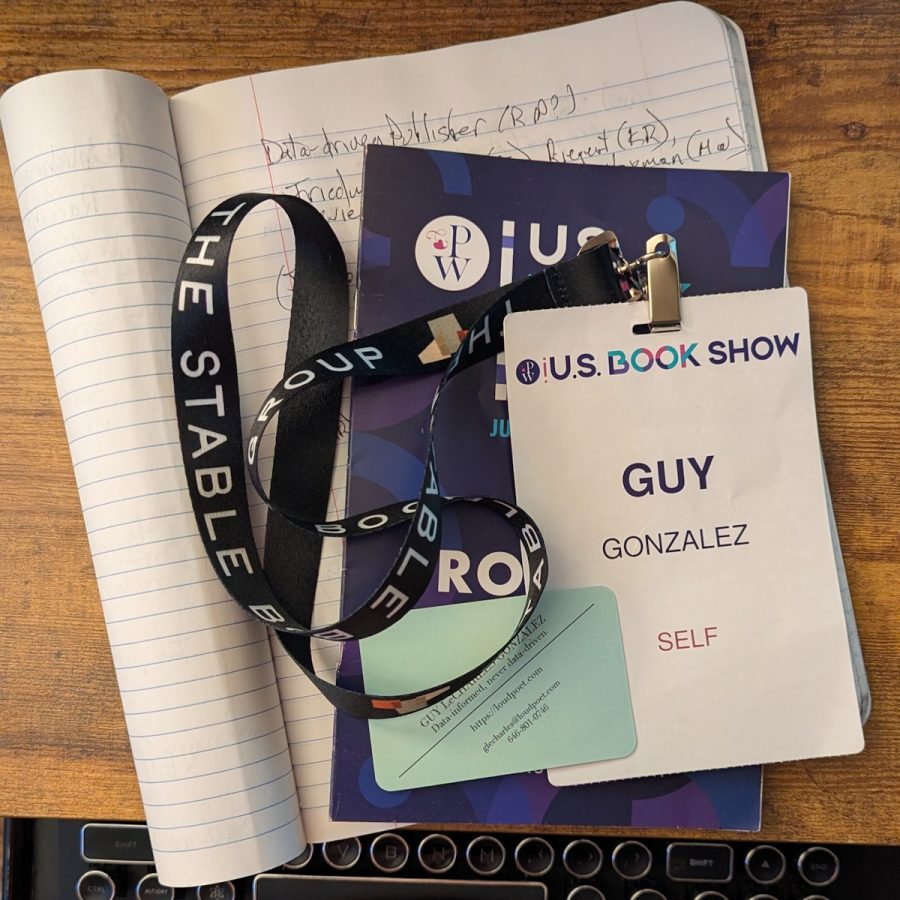
I attended Publishers Weekly‘s US Book Show for the first time last week, cautiously optimistic about the main program, but at the last minute, I decided to attend the first day’s workshop and reception, too, because networking is important when you’re on the market, and I’m rusty as hell!
Contrary to what most people who only know me online may think, I’m an ambivert who prefers shining the spotlight on others rather than being in it myself. I love connecting and promoting other people, but am terrible at small talk with strangers, and very rarely proactively introduce myself to people I don’t know. Even all the way back to my poetry days, I was always more comfortable producing and hosting events than being onstage reading my own work.
So even though I wasn’t the target audience for the show’s “Navigating Publishing Careers Today: From Entry-Level to Advancement” workshop, I’m really glad I attended it. It wasn’t recorded on purpose to make participation more comfortable for everyone, and I didn’t take notes, but after a slow start, the conversation really opened up and revealed a fascinating, but not at all surprising, generation gap amongst the notably diverse mix of attendees.
It’s a Different World
I generally avoid giving career advice to anyone, especially anyone younger, because my career path was unusual and almost impossible to duplicate these days. For one, I came in through the magazine side of the business, which is nearly unrecognizable from the industry I joined in 1993 via a couple of temp assignments. Over the years, the book side of the business had no interest in my reader-centric experience until I was running Digital Book World nearly 20 years later, but very few of them had created roles for someone like me yet.
For the first half of my career, I was usually one of the youngest people in the room, and definitely one of the few people of color. I got older and more experienced, but even in 2026, I’m still one of the few people of color in any publishing-related situation way too often.
Looking at the hundreds of attendees for the career workshop, I saw one of the most diverse rooms I’ve ever seen at a publishing event — not just race and gender, but there was at least a 50-year age gap between the oldest and youngest people — and Gen Z came hungry for real talk.
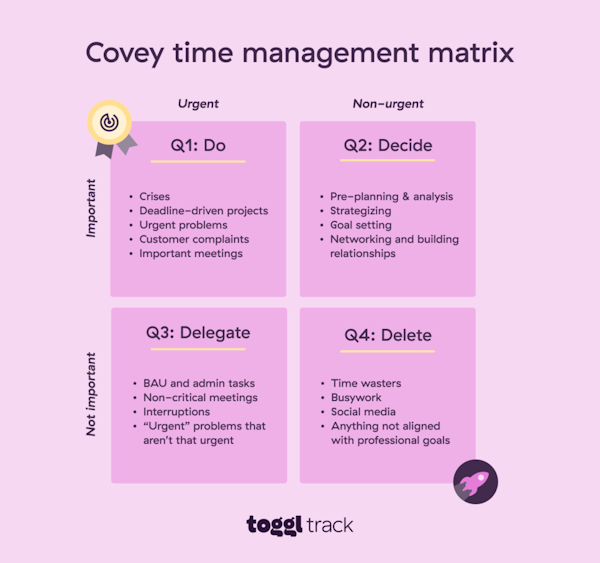
Following an overview of Stephen Covey’s time management matrix from The 7 Habits of Highly Effective People, and some well-intentioned advice for junior staff to schedule time for “Quadrant 2: Important but not urgent” (aka, personal development) in their calendars, it was noted (by me) that most junior staff are typically buried in “Quadrant 3: Urgent but not important” (aka, tedious meetings and admin tasks), and have limited control over their own calendars and priorities.
I noted that throughout my own career, personal development mostly happened during personal time (paid for with personal dimes), and any advice that doesn’t take that reality into account is like pretending individual conservation efforts are the solution while corporations pay zero taxes and build data centers in our backyards. Initially misinterpreted as suggesting using personal time was a good thing, a few younger attendees immediately pushed back, and the conversation took a turn towards being more engaging and productive.
Gen Z Says, “Nope.”
The first time I had a conversation with my own Gen Z son where the words “that’s just how it is” escaped my mouth, I had a multi-layered epiphany. It was my first, “Ok, Boomer!” moment, immediately followed by, “He’s absolutely right, though.” It wasn’t the last time we’d have a conversation like that, and even though the answer unfortunately is sometimes still, “That’s just how it is.” — it always includes consideration for how things can change, too.
Gen Z isn’t willing to accept how things have always been done, and unlike Gen X (me), they’ve lived their entire lives in a world that’s proven the old ways of doing things don’t work, and they definitely aren’t designed to ensure their generation has more opportunities than previous ones did. The overwhelming vibe in the workshop was that managers need to be — and do — better, and some of the older Gen Z in the crowd (including some Star Watch honorees) encouraged self-advocacy, clear boundaries, and (my favorite comment of the day) unionization.
As an Elder Gen X, in the years since I became a manager, I’ve always strived to be the kind of manager I would want to have, while also expanding my understanding that different people want, and need, different things from their work situations. I’ve also learned the hard way that sometimes two people just don’t work well together, and if there’s no structure in place to help overcome that challenge, it can create a toxic environment for everyone.
In lieu of career advice for younger people, these are the primary takeaways that stuck with me for managers who should be helping make career paths smoother for everyone:
- Communication is key, and it has to go both ways. While it’s important for junior staff to be able to speak up for themselves, managers have to proactively create safe spaces that give them the confidence that speaking up is actually safe to do. Ideally, that goes all the way up the chain, through HR, to the CEO, otherwise you create pockets of friction where open communication isn’t valued or is tacitly discouraged.
- Be the Change. Managers have to lead by example, proactively modeling what good communication looks like. That includes publicly speaking up in tense situations, and always advocating for your staff’s needs. I’ve had bosses who supported open communication behind closed doors, but would stay silent in larger meetings, leaving their staff to fend for themselves.
- It’s People, not Human Resources. Throughout most of my career, HR has typically been about managing forms and benefits, and rarely about proactively advocating for staff’s needs. A great HR lead is only as effective as the system (“culture”) they’re working within let’s them be, and ironically, that’s ultimately about their own relationship with the final boss: the C-suite.
A New Digital Book World?
Kudos to Krista Rafanello and the Publishers Weekly team for putting on a great show. Krista and I worked together at Library Journal many years ago, and I was extremely proud to see her front and center throughout the show, but even more so for the program she helped put together. I haven’t worked with many people who have as strong a passion for the people in the publishing industry like Krista does, and I’m hoping this year’s expanded event is a sign of greater things to come. The industry absolutely needs an annual gathering that combines smart programming and great networking opportunities across the supply chain, and PW is well-suited to making it happen with broad industry support.
Overall, it was a strong program with useful insights and takeaways, particularly on career development, data-INFORMED publishing, SEO vs. GEO, and the importance of backlist. I even unexpectedly got to wear my occasional journalist hat and cover one of the best sessions for Publishing Perspectives:
The expert panel representing trade publishers of all sizes and different editorial approaches ultimately agreed on two things: it’s better to be data-informed than data-driven, and human insight remains a competitive advantage for all publishers.
—Data-driven vs. Data-informed: An Inflection Point for Publishers at the US Book Show
“Data-informed, never data-driven” has been my professional tagline for a long time, and while 2018 definitely wasn’t the first time I mentioned it, I think it was the first time I framed it publicly as a strategic imperative with receipts. Now book publishers are having an overdue epiphany about the challenges and limitations of working with big data, which will hopefully help them proactively identify the critical limitations so many of the new tech “solutions” being pitched at them actually have.
(It doesn’t help that many of those “solutions” are being used to increase the productivity of, lower the pay for, or outright eliminate the need for junior staff who are most likely to be forced to use them against their will.)
Beyond the program, the attendees were a diverse, multi-generational mix of people from across the supply chain, and it was great connecting with old friends and colleagues, and meeting some interesting new people, too. (I was also pleased to see several vendor reps actually attending sessions rather than hiding behind their tables waiting for people to come to them, something that drives me crazy at most events.)
I’m glad I attended because it was a timely boost of adrenalin that reminded me I’m not only still passionate about this bonkers industry — warts and all — but remain as optimistic about its future as I was back in my more “innocent” DBW days!
Do you like email?
Sign up here to get my bi-weekly "newsletter" and/or receive every new blog post delivered right to your inbox. (Burner emails are fine. I get it!)
Hoping you made some connections towards your next phase too. Thanks for this report!
It was a good show for connections, too! A positive two days across the board.
“I’m an ambivert who prefers shining the spotlight on others rather than being in it myself. I love connecting and promoting other people, but am terrible at small talk with strangers…”
You just perfectly described what I struggle with every day. I love connecting with and propping up others, but I’m always scared of them asking what I do for a living. Because I’m so afraid of becoming the center of attention. Which tends to happen when people find out I have dream job everyone wants. Puts me in a real Hannah Montana sort of situation when I’m trying to make new connections. (There’s a Gen Z reference for ya!)
I think publishing benefits from having you around. I think your unconventional career journey is inspiring, especially as a zennial who said “nope!” to the traditional career as well. It’s always refreshing to see someone who can just unapologetically be themself. Anyone who doesn’t hire you is really missing out!
Aw, thank you! And the struggle is real, but often worth the effort. After seven years of WFH, I’m ready for more face time with people. Last week was great, and I’m looking forward to ALA even more now.