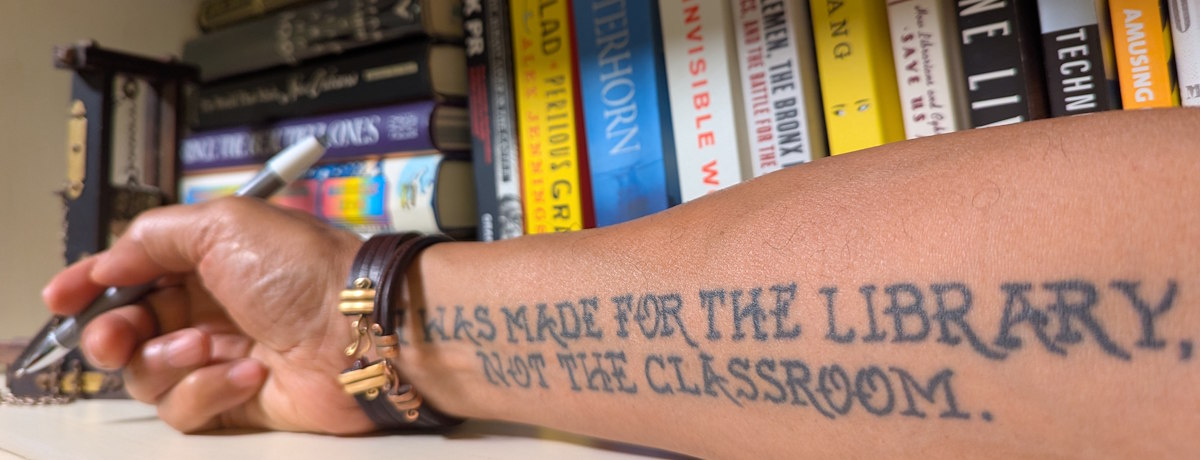
"I have just read the immortal poems of the ages and come away dull. I don't know who's at fault; maybe it's the weather, but I sense a lot of pretense and poesy footwork: I am writing a poem, they seem to say, look at me! Poetry must be forgotten; we must get down to raw paint, splatter." Charles Bukowski Confession: I loathe most formal poetry. Sestinas, sonnets, terza rimas, oh my! While I appreciate the exercise of writing in a particular form, the end result is usually a self-indulgent bit of forgettable wordplay rarely worth reading, never mind hearing…
You're not listening anyway. by MadRussianPhotography
You know the stereotype of the guy on the first date who can’t stop talking about himself, only to wonder why he doesn’t get a kiss at the end of the night, never mind a second date?
That guy is like advertising.
In the latest flare-up of the “print is dead” debate, Michael Josefowicz’ provocative article for MediaShift entitled “The Fallacy of the ‘Print Is Dead’ Meme” has generated some interesting feedback, partly for daring to counter the meme, and partly for clinging to the ad-supported model that has pushed many newspapers and magazines onto the endangered list:
[T]o extrapolate from personal experience to a statement about what is going to happen in the world doesn’t work. But that’s exactly what many of the people foretelling the death of print are doing.
That’s because most of the public discourse tends to be dominated by information junkies and there is little doubt that if you’re an information junkie, the web is the way to go. But the reality is that info-junkies are only a small tribe. They consume the news at a prodigious rate and the web is the fastest way to satisfy their appetite. Thus, they’re also the most vocal tribe — so it’s easy to get the impression that theirs is the most widely held conclusion. But if you listen to some of the discourse, it soon becomes apparent that it’s only one way to look at it…
Because every business understands the value of print advertising, the trick is only to make the buy for a print/web ad combo easy and affordable.
Responding to MediaBistro’s highlighting of the article, I noted: “I agree with Josefowicz that print isn’t dead, but he’s wrong about advertising; that ship has sailed. Interruption IS dead.”
How can u b an expert without legitimate knowledge or legitimate experience Shaq oneal
about 9 hours ago from TwitterBerry
It’s been fascinating watching the odd, mostly one-sided battle going on between so-called social media experts and traditional marketing and PR professionals, as the former continue to pound their virtual drums on a daily basis about how they’re the future and without their expertise, companies are doomed to failure.
DOOMED!
I wrote about the need for some perspective a couple of weeks ago in “Attack of the Social Media Gurus“, and have been tracking the growing backlash there with links to relevant articles as they pop up — including one of my favorites from Ad Age featuring Unilever Chief Marketing Officer Simon Clift’s wise observation: “Social media is not a strategy. You need to understand it, and you’ll need to deploy it as a tactic.” — but a recent comment by social media “rock star” Chris Brogan really rubbed me the wrong way, giving flashbacks to the explosion of the first dot.com bubble, and underscoring one of the main reasons some marketers, and the executives they report to, are reluctant to fully embrace social “media”.
Shaquille O’Neal, of all people, pretty much nailed it last night on Twitter with the aforementioned tweet.
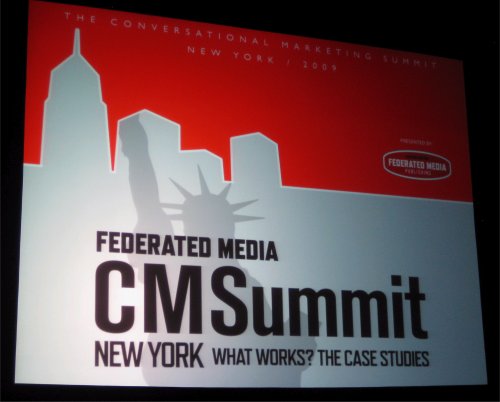
I don’t do many events these days beyond the random open mic appearance at louderARTS or Urbana, so I’m very excited about these two gigs this week, the NY Round Table Writers’ Conference and Acentos Poetry Workshop, as well as the Conversational Marketing Summit I’ll be attending in June.
The Acentos Writers Workshop was established with the purpose of nurturing the newer voices in the poetry community. With writers from across several genres donating their time, the workshop encourages newer writers to hone their craft, establish and create community, and perform their work in front of growing audiences. The workshop accepts writers of all backgrounds and skill level to foster growth and maximize their full potential and grow as writers.
“Oh, I get it. It’s very clever. How’s that working out for you?”
–Tyler Durden, Fight Club
Well, it seemed like a good idea.
Magazine publishing executives are under a lot of pressure these days after the perfect storm of a wretched economy and the deflating of the emedia bubble have wreaked havoc on their already narrow profit margins as advertising declined precipitously in 2008 and isn’t looking much better so far in 2009. Many people have lost their jobs as a slew of magazines have folded, contracted, or moved to an online-only existence, and the most optimistic projections don’t predict a turnaround before 2010.
Which magazines will still be standing next year is anyone’s guess, but in the midst of much hand-wringing and speculation, Time, Inc. launched an interesting initiative that caught my attention: mine: My Magazine, My Way — a single-sponsored, customized publication, print and digital, featuring content from up to five of their eight most advertiser-friendly brands.
I got my first issue in the mail last night and, if it represents the best effort Time, Inc. can put forward, I’d suggest selling their stock quickly if you’re crazy enough to still own any, and considering a Plan B if you work for a print-centric media company.
Digital guru Steve Rubel interviews Jeff Jarvis, author of “What Would Google Do?“, who makes an interesting point that I suspect many marketers are going to have in the back of their minds when the economy ultimately turns around and they reassess their marketing strategies and measure the results of their responses to the meltdown.
Mr. Rubel: Are customer service and peer-to-peer advocacy the new advertising? And if so, how does that change the ad industry?
Mr. Jarvis: Advertising is failure.
If you have a great product or service customers sell for you and a great relationship with those customers, you don’t need to advertise.
OK, that’s going too far. There is still a need to advertise — because customers don’t know about your product or a change in it or because, in the case of Apple, you want to add a gloss to the product and its customers. But in the book, I suggest that marketers should imagine stopping all advertising and then ask where they would spend their first dollar.
In an age when competition and pricing are opened up online and when your product is your ad, you need to spend your first dollar on the quality of your product or service. If you’re Zappos, you spend the next dollar on customer service and call that marketing. If the next dollar goes to advertising, there has to be a reason — and if the product is good enough, that reason may fade away.