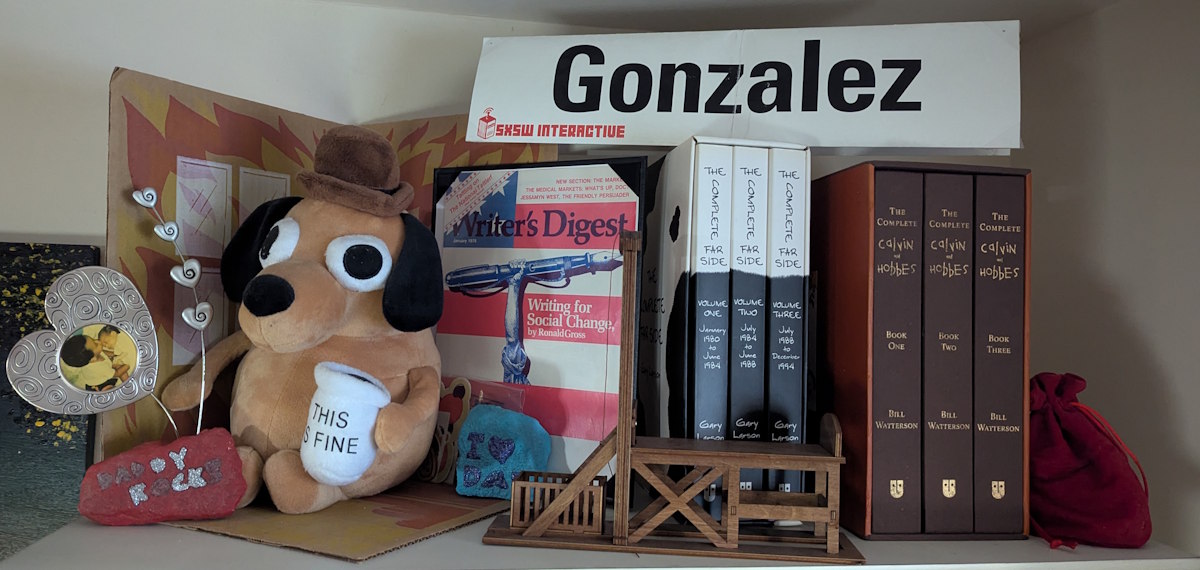
NOTE: I went to sleep early on Tuesday night knowing several results were leaning in positive directions, but I did not expect to wake up to what ultimately happened all across the country. It’s only the first major national victory in a decades-long, grueling campaign, and there is still so much work to do, but it’s okay to spend a couple of days enjoying a rare glimmer of light in the darkness before getting back to work. Resistance is never futile, and it can be contagious! (And if you’re actually mad about the results for any reason, it’s okay to quietly unsubscribe or unfollow.)
_ONE
CPKC to STB: ‘Terminate This Poisoned Proceeding, Now’ | William C. Vantuono
In his talk, Vena made statements that have been interpreted by some as threats that UP would retaliate against shippers who do not support the proposed merger. UP was instructed to provide the video without the “Confidential” label by midnight, Oct. 30, 2026.
While there are some interesting parallels between the failed Penguin Random House / Simon & Schuster merger and the proposed Union Pacific / Norfolk Southern merger, the opposition to the latter seems way more public and intense, arguably because the stakes are so much higher. I wasn’t expecting an embarrassing public statement by a CEO to be another thing they had in common, though!
The priorities of the different administrations involved are another interesting factor, too, even more so after this week’s surprising midterm results. It’s surely a coincidence that the Surface Transportation Board ruled Union Pacific have to make the incriminating video public the day after the elections, but I do wonder if the odds for approving the merger have shifted against it just a bit now?
__TWO
Language Models Are Erasing Our Weirdness | Vivienne L’Ecuyer Ming
By routing our brainstorming, our prose, and our conceptual representations through a tiny handful of foundation models trained via the same next-token objectives and smoothed over by the same human-preference raters, we are building an epistemic centrifuge—one that systematically spins out the weird, the local, and the idiosyncratic. Human thought is being purified into the dead center of the statistical distribution.
I wish all “AI” advocates shared Ming’s love of research, data, and critical thinking, rather than simply regurgitating PR hype and inevitability narratives because their tool of choice makes them feel special.
She’s a true believer, but is primarily focused on tangible solutions to real challenges rather than hyping up some company’s valuations, and she’s never afraid to call bullshit on herself or others. I don’t always agree with her takes on where things are headed, but I appreciate and respect the work she’s done — and continues to do — that informs her perspective, and her newsletter almost always offers something interesting to chew on.
___THREE
Kids are outsmarting social media bans. That’s not a problem we need to solve. | Michal Luria, Aliya Bhatia, Danah Boyd
Rather than attempting to block young people from online services that allow them to access information and engage in age-essential communication, policymakers should focus on the incentives that drive companies to engage in behavior that creates risks for kids in the first place.
Kids will always find a way around obstacles purposefully designed for them, and while I think most social media platforms are trash and should be shuttered, I also believe that their worst faults are symptoms of a larger problem the authors get at here. (*whispers* It’s always Capitalism.)
Of course, it’s much easier to pretend to regulate kids’ behavior (LOL!) than it is to actually regulate tech companies, and that has unfortunately been a bi-partisan belief for way too long. Maybe those times are changing, too?
____FOUR
A TV show turned paedophile-hunting into entertainment – and may have changed us all in the process | Tom Murray
Osit’s concerns stretch far beyond To Catch a Predator. He’s ultimately asking what happens when human pain becomes a product.
I remember occasionally watching To Catch a Predator in its heyday and feeling a little weird about what seemed like entrapment scenarios orchestrated purely for entertainment. I honestly wasn’t too bothered by it, though, because I don’t think you can convince me that pedos deserve any sympathy, but maybe we deserve better entertainment?
I haven’t seen Primetime yet, but after reading about last year’s documentary, Predators, I want to see both as a double feature soon.
_____FIVE
The real Lord of the Flies: what happened when six boys were shipwrecked for 15 months | Rutger Bregman
The story concerned six boys who had been found three weeks earlier on a rocky islet south of Tonga, an island group in the Pacific Ocean. The boys had been rescued by an Australian sea captain after being marooned on the island of ‘Ata for more than a year.
I forget how this hit my radar, but with Yellowjackets returning for its final season, it was a good reminder of why I lost all interest in the show and don’t plan on watching it. Its original premise was intriguing, and the first two seasons were engaging, but the plot and character arcs became so ridiculously cartoonish that I just didn’t care anymore by the time last season ended.
The Tongan castaways‘ incredible story probably wouldn’t be considered “Prestige TV” material in these dark times, but reading about them is an absolutely wonderful alternative to doomscrolling.
______BONUS
Do you like email?
Sign up here to get my bi-weekly "newsletter" and/or receive every new blog post delivered right to your inbox. (Burner emails are fine. I get it!)