
NOTE: 2026 has been a wild year on so many levels, and this “newsletter” has become an unexpected anchor for me. It’s always primarily been about keeping myself engaged, sharpening my own thoughts about particular topics I’m interested in, and (usually) maintaining a consistent schedule. It’s also become about the small group of regular readers who periodically check in with comments (here, on social, or via email), feedback, and links to other things of interest. It’s not quite the dynamic old days of Peak Blog, but it’s close enough to be optimistic that all isn’t lost. Yet.
_ONE
A thank-you on Veterans Day won’t close the growing military-civilian gap | Scott Parrott
The military-civilian gap exists in part because, since the draft ended in 1973, the share of Americans who have served in the armed forces has declined. Only about 6% of adults were veterans in 2022, a decline from 18% in 1980. Compounding the issue, a decreasing proportion of U.S. adults personally know someone who has served. That means much of the population is learning about military life through mass media representation.
I don’t typically talk about my time in the military because my “service” was complicated, and I hate how often it is divisively politicized, so Veteran’s Day is always a weird one for me. I don’t want people to reflexively thank me for my service because it probably assumes things that aren’t true for either of us.
While I know media depictions have heavily skewed people’s perceptions of the military, for better and worse — including, sadly, among those who have served — I’d never considered the math behind the disconnect between fantasy and reality.
Many years ago, in a different life, I wrote a poem to unpack my own “service”, and then rewrote it years later to get it right. I share it every year as a reminder for myself and, hopefully, to add some nuance for people who have only served vicariously through Call of Duty and Michael Bay movies.
__TWO
How Trump’s Dismantling of the VA Left a Veterans Hospital in Crisis | Eric Umansky, Joel Jacobs, Hokyoung Kim
After pushback from vets groups and others, the administration retreated from its threat of mass layoffs. But it found another, less attention-getting way to shrink the VA. If Trump’s appointees couldn’t lay off employees, they would make work conditions so untenable that staffers would leave on their own.
Politicians love to use the military as a prop — whether touting their own (often irrelevant) service, or borrowing valor by association — but so few extend their photo-op thankfulness to policies that treat active duty members and veterans of the military as actual human beings. This article focuses on my local VA hospital to tell a national story that should be required reading for anyone who’s ever uttered the words, “Thank you for service,” and will be recognizable to anyone familiar with the phrase, “Flood the zone with shit.”
We’re soaking in it.
___THREE
How I’ve Used AI to Improve My Writing Business | Jane Friedman
I don’t think prohibiting AI use or shaming people for AI use is productive or necessary for us to live in a world that supports human creativity and flourishing. Some will say this makes me pro-AI. I think it makes me open to the possibility this technology has something useful to offer creative people. I was personally affected by AI fraud more than three years ago and I understand the destructive nature of what it does. That doesn’t mean it’s not constructive as well.
Jane and I go way back, and there are few people in the publishing industry I respect as much as her, but we definitely have a fundamental disagreement when it comes to using “AI” tools. That said, I genuinely value her informed observations because I’m in no rush to use these tools myself, but I always want to ensure my healthy skepticism has new data to process.
I regularly ask people who use “AI” tools for specific use cases, and unlike most of them, she delivers a bunch of specific examples, along with insights into the alternatives, and the limitations. Most of them fall under the category of interesting “time-saving shortcuts” and, more importantly, none of them suggest she’s outsourcing her creativity or expertise to generate her informative weekly newsletter, The Hot Sheet.
Most notably, it’s a post she absolutely didn’t have to write nor make publicly available, because the “AI” discourse can get toxic and she will probably catch some lowkey flak for it in certain circles. I see it as another example of her commitment to transparency and educating her audience, though, two things not enough journalists (nor their employers) take seriously in their own coverage of “AI”.
____FOUR
CD Projekt Red used AI to alter the voice of Geralt’s original Polish actor in Witcher 3: Songs of the Past | Sophie McEvoy
CDPR approached Ukrainian AI company Respeecher to adjust Rozenek’s voice, with the actor’s consent. “The point is that this voice should be as close as possible to my voice from 12 years ago,” Rozenek said. “I have great trust […] for the creators of this game.”
I remain open to examples of “good” use cases for “AI”, and will even consider blurry definitions of “ethical” if there’s some transparency around how the tool in question works, and full awareness of the alternatives. This is a rare example of the former in gaming, helping an actor overcome a disability to continue working, with his full consent and participation, but the ethics are still debatable.
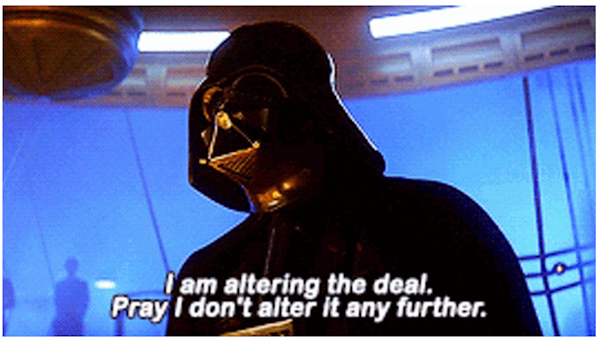
Respeecher is the same company that allows Disney to have James Earl Jones continue to be the voice of Darth Vader in new productions, also with his consent. They’ve also endorsed the NO FAKES Act, which you can take as proof of their commitment to consent, or have a justifiably more cynical take, because this same technology can easily be used for nefarious purposes — and we all remember when Google’s motto was, “Don’t be evil.”
While consent is setting the ethical bar underneath the floor, Jones did consent to being the voice of Darth Vader, potentially forever. Unfortunately, he’s dead now and has no control over how Disney uses Darth Vader in the future, nor what they might have him say with Jones’ voice, and Disney has certainly never claimed “Don’t be evil.” as a guiding principle.
_____FIVE
Life Under the Algorithm | Veena Dubal, Katie J. Wells
Rather than just limiting her purchasing power, these algorithmic wage and pricing systems predetermine what her purchasing power can ever be. A low wage allocated today does not merely leave Elena with less money; it produces data about what she will accept tomorrow.
Way back in 2009, I attended a presentation by Peter Shankman, founder of “Help a Reporter Out“, where he offered a simultaneously intriguing and creepy vision of social media’s future that turned out to be impressively prescient, but way too optimistic about how it would work for users’ benefit.
In Dissent, Dubal and Wells go in the other direction, outlining an alarming but credible dystopian view of a future that we’re arguably already living in the early stages of. It made me want to unplug everything, while also making me realize that’s not a realistic option for anyone who isn’t already independently wealthy.
We’re soaking in it.
______BONUS
Do you like email?
Sign up here to get my bi-weekly "newsletter" and/or receive every new blog post delivered right to your inbox. (Burner emails are fine. I get it!)